Article
The Hoodie-Over-the-Coverall Problem: Choosing FR and Non-FR Winter Jackets for Saudi Night Shifts
Saudi winters are mild by day but cold at dawn and after dark. If the layer a worker adds over FR coveralls isn't flame resistant, it can undo the protection underneath.

Winter on Saudi sites is short, but the cold shifts are real
Afternoons stay comfortable for most of the Saudi winter. Crews who start before sunrise, work night shutdowns or sit on exposed platforms see a different season:
- Highlands are already cool. In late October the National Center for Meteorology (NCM) reported temperatures below 15°C in parts of Najran, Al-Baha, Asir and southern Makkah, with a low of 11°C in Badr Al-Janoub.
- The north gets properly cold. During last January's cold wave, Arar, Qurayyat and Turaif all recorded 0°C, and frost formed in Tabuk.
- This winter will be wet. NCM's November–January outlook expects warmer-than-normal averages but above-average rain across Riyadh, the Eastern Province, Makkah and the Northern Borders. Rain and wind make a mild night feel much colder on site.
So the question isn't whether workers will add a layer. It's what that layer is made of.
The hidden hazard: a non-FR hoodie over FR coveralls
When the cold arrives, workers reach for whatever they own: a polyester fleece, a gym hoodie, a padded jacket from the local market. Worn over FR coveralls, that layer creates three problems:
- It can ignite and keep burning. The outer layer is the first thing a flash fire or arc reaches. If it burns, the coverall underneath is now sitting inside a fire.
- It can melt onto the skin. Synthetic fibres such as polyester and nylon melt and drip. US OSHA rules for electrical work (29 CFR 1910.269) specifically restrict clothing made from acetate, nylon, polyester, rayon and polypropylene for workers exposed to flames or arcs.
- It hides the FR garment. A supervisor walking the unit sees a hoodie, not the rated coverall, so the PPE check stops working.
NFPA 70E says it plainly: garments worn as outer layers over arc-rated clothing, such as jackets or rainwear, must also be arc rated. An FR coverall is only as good as the layer outside it.
FR or non-FR? Let the hazard assessment decide
The simplest rule for any site: if the coverall must be FR, the jacket over it must be FR too.
FR or arc-rated outerwear is needed where there is:
- Flash fire risk: gas plants, refineries, NGL and petrochemical units, and hot-work zones (Oil & Gas, Petrochemical)
- Arc flash risk: substations, switchgear and energised panels (Electrical)
- A PPE matrix that already specifies FR coveralls for the area
A non-FR jacket is usually fine for general construction away from hydrocarbons and live electrical work, warehouses, logistics yards, and workshops without hot work. Even there, avoid loose drawstrings near rotating machinery, and add hi-vis wherever vehicles move.
Hoodie, softshell, insulated or parka: choosing the style for the shift
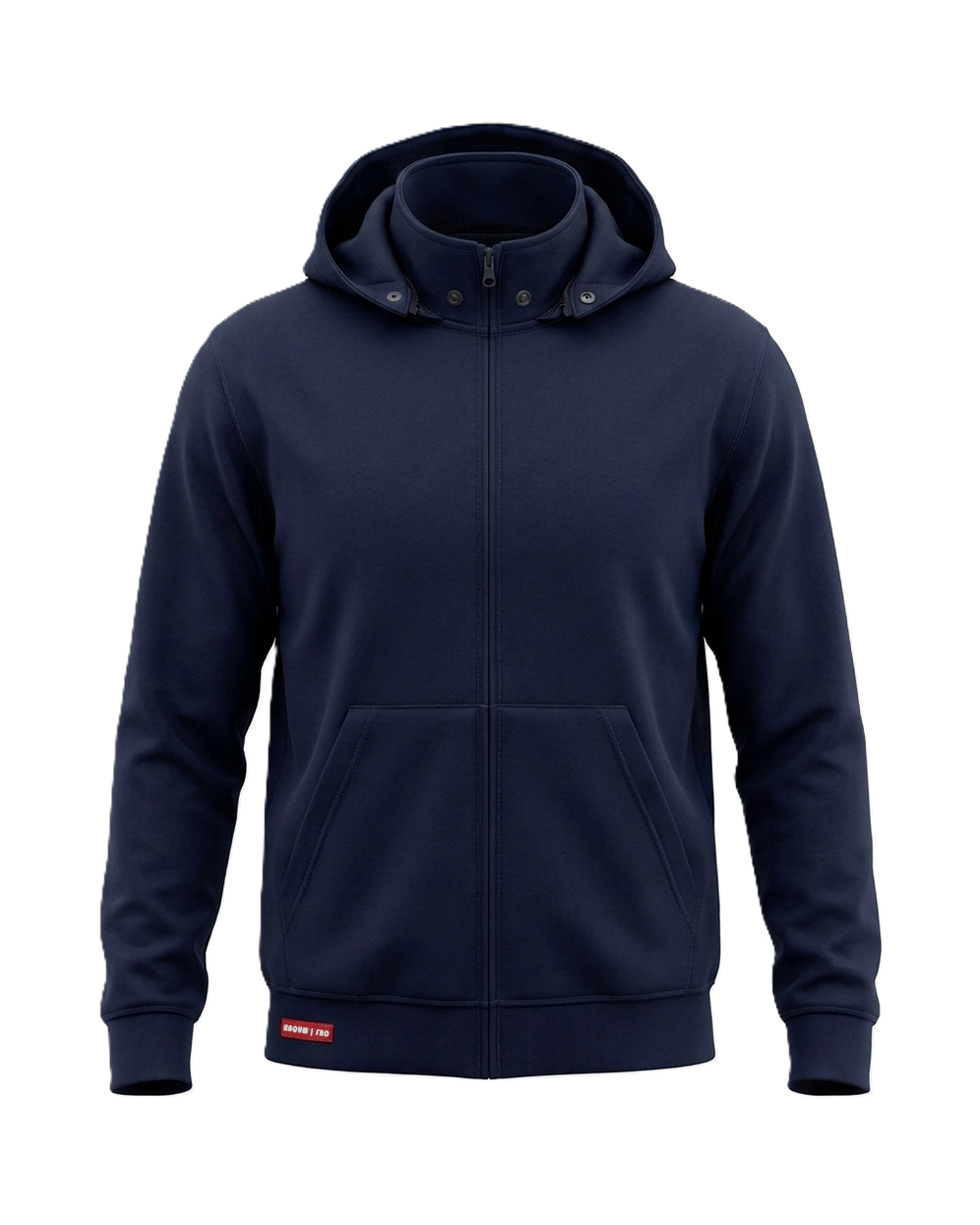
- FR fleece hoodie, for cool mornings and layering. The HAQUM Inherent FR Fleece Hoody Jacket (HQFR-HJ350) uses a 350 gsm inherently flame-resistant fleece. It is certified to NFPA 2112 and NFPA 70E, with a 25 cal/cm² arc rating (CAT 3). Its balaclava-style hood detaches.
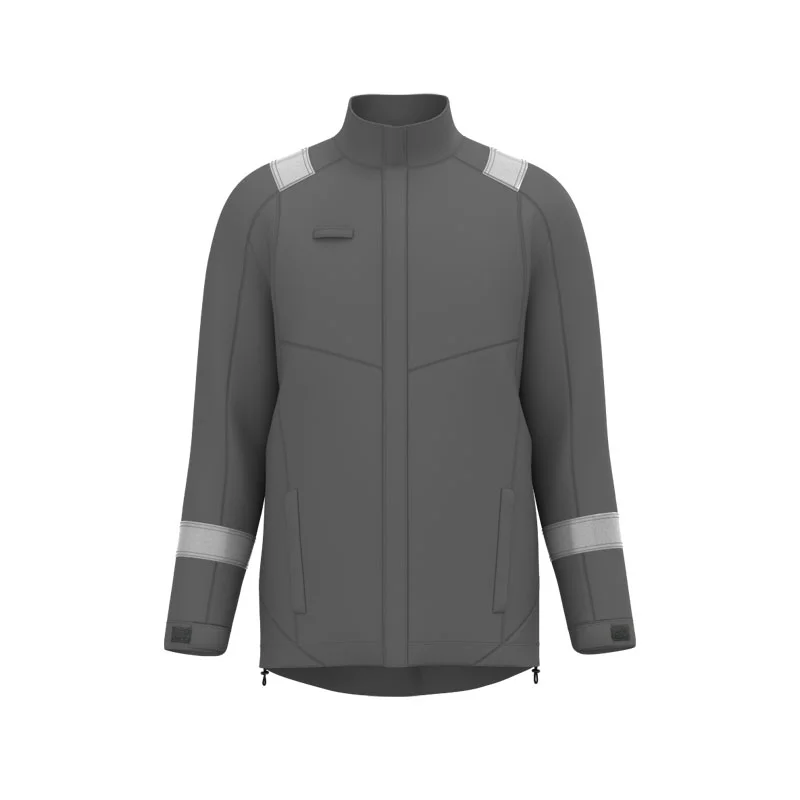
- FR softshell, for wind without bulk. The Harbor FR Softshell Jacket (FR-SJ350) is fleece-lined and lists EN ISO 11612, EN 1149-5 and IEC 61482-2.
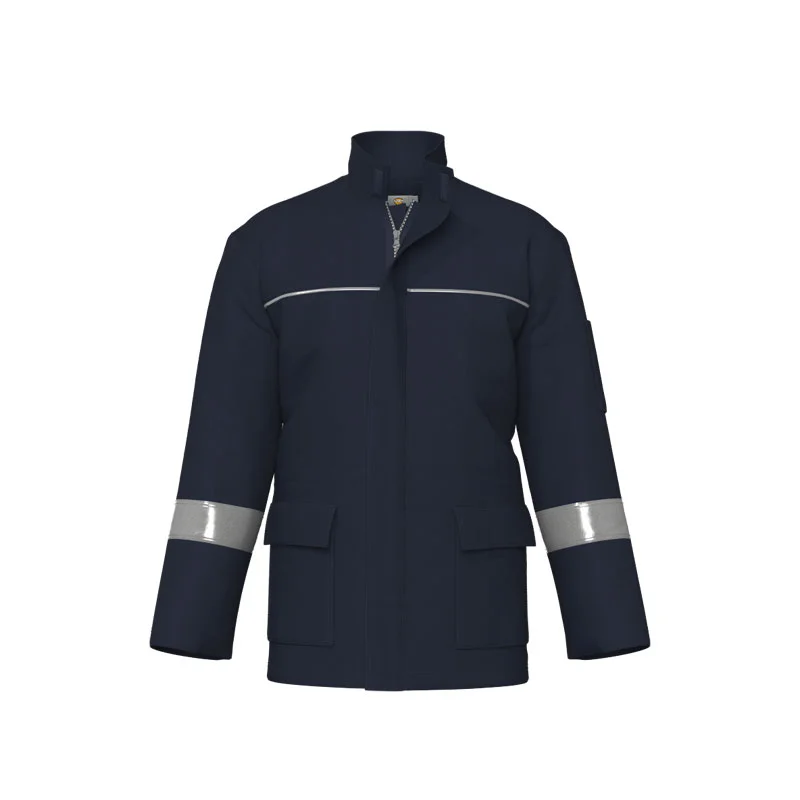
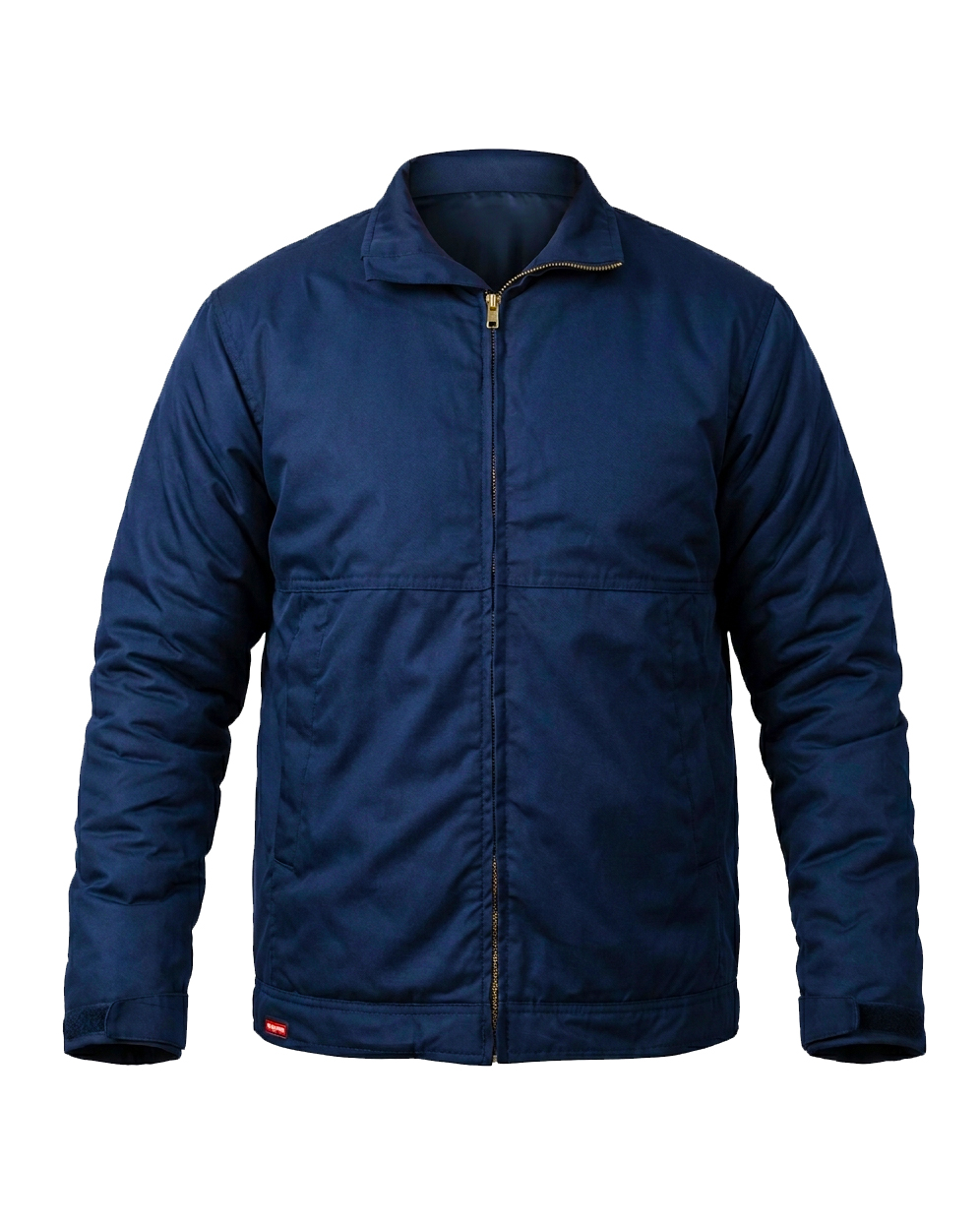
- Insulated FR jacket, for the coldest dawns and night shutdowns. The HAQUM Layer Insulated FR Jacket (HQFR-NJ520) combines a meta-aramid outer, insulated mid layer and FR cotton lining, to EN ISO 11612, EN 1149-5 and NFPA 70E. It can carry company logos. The Harbor Everyday Winter Jacket (FR-EQJ500) is another padded option, listing EN ISO 11612, EN ISO 11611 and IEC 61482-2.
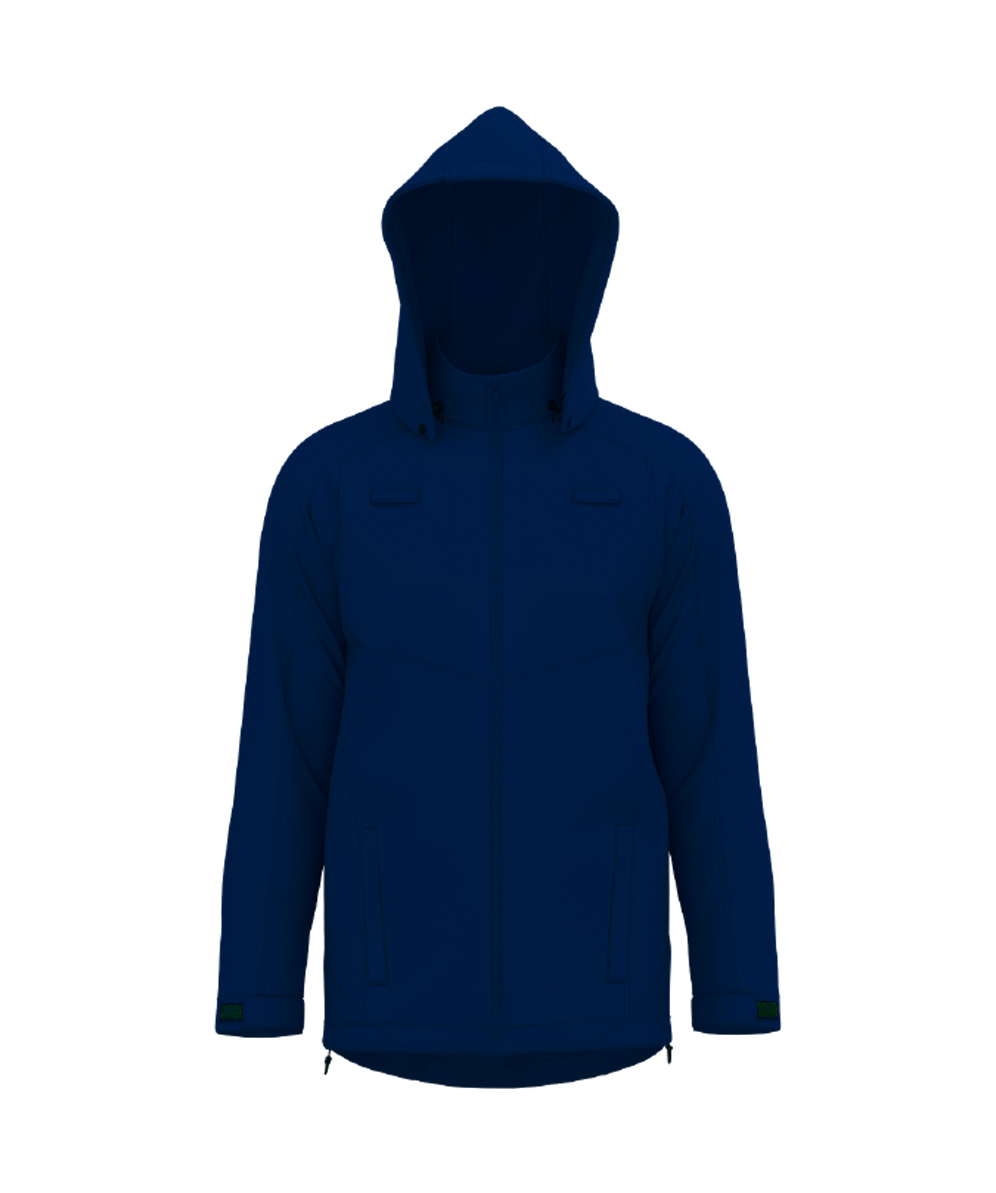
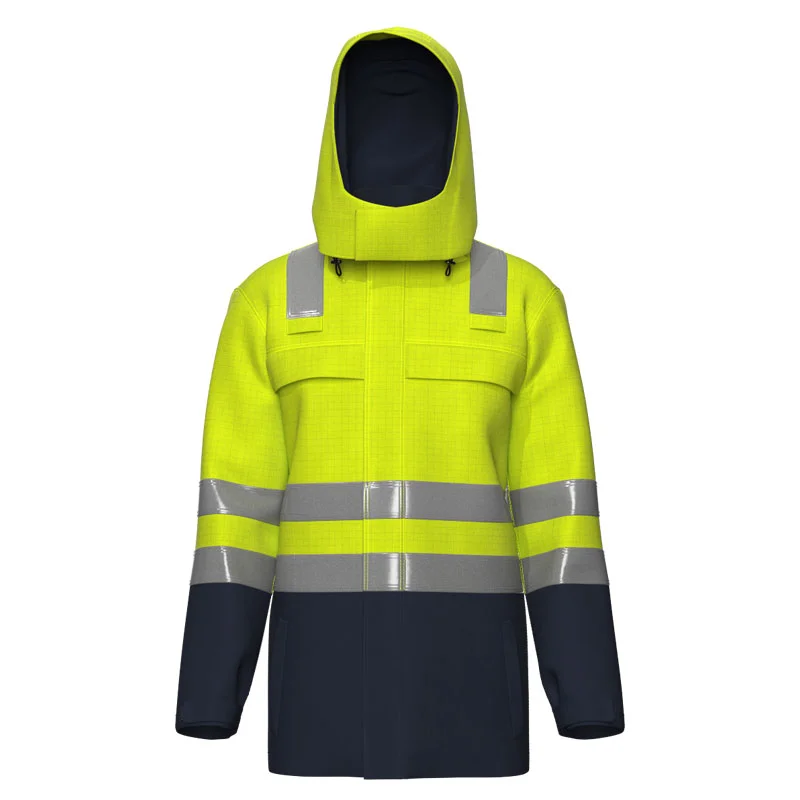
- Hi-vis parka, for wet, windy, mixed-traffic work. The Harbor Weatheron Parka (FR-WPAJ420) is hooded and insulated, with hi-vis to EN ISO 20471 and rain protection to EN 343. Check that the FR standards on its label match what your PPE matrix asks for.
- Non-FR softshell or hooded jacket, for non-FR areas only. The Harbor Softshell Hoodie Jacket (NFR-PSH601) and the workwear jackets in our Jackets range suit warehouses, yards and general site work.
Labels to check before you buy
Read the label, not the product name. A jacket called "FR" should list the standard your site requires:
- Flash fire and heat: NFPA 2112 or EN ISO 11612
- Arc flash: NFPA 70E or IEC 61482-2, with an arc rating in cal/cm² at or above the incident energy for the task
- Static in zoned areas: EN 1149-5
- Rain: EN 343
- Visibility: EN ISO 20471
Also check whether the FR protection is inherent (built into the fibre) or treated, and follow the care label so laundering doesn't reduce it.
A winter outerwear checklist for HSE and procurement
- Add outerwear to the PPE matrix. Name the FR jacket or hoodie for each area that requires FR coveralls.
- Ban personal non-FR layers in FR areas. Brief crews at toolbox talks before the first cold snap, not after.
- Match the ratings. The jacket's arc rating should meet or exceed the task's incident energy, like the coverall's.
- Check antistatic for work in classified (zoned) areas.
- Size over the coverall. Have workers try jackets on over their coveralls and with full PPE.
- Check the hood. It should fit under a hard hat or detach.
- Order before December. Allow lead time for size runs and company logos.
- Keep a few spares at the gate for visitors and new starters, so nobody improvises.
Winter in Saudi Arabia is short, but the cold shifts arrive every year. Put the right layer in the PPE store before workers find their own. Browse our FR clothing range → or talk to our team → about sizing and logos for your crew.
Sources
- Heavy thunderstorms to continue in parts of Saudi Arabia as October rains peak, Arab News, 25 October 2026
- Saudi Arabia braces for above-average rainfall, warmer weather through January 2027, Gulf News, 3 November 2026
- Saudi Arabia cold wave drops temperatures to zero, 5 January 2026
- FR apparel in cold weather, Safety+Health magazine (National Safety Council), 21 December 2023
- 29 CFR 1910.269 — Electric power generation, transmission, and distribution, US OSHA